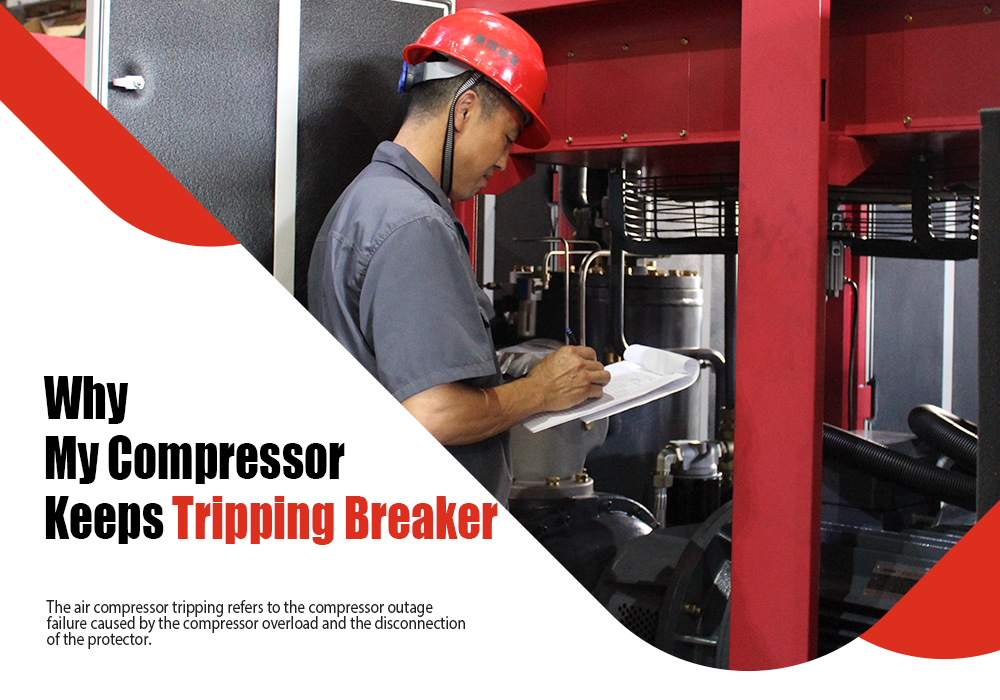
Why does the air compressor keep tripping? What damage might frequent tripping cause to the air compressor? How should one troubleshoot the cause of tripping? This article will provide comprehensive answers to these questions.
 Why My Compressor Keeps Tripping Breaker?
 Why My Compressor Keeps Tripping Breaker?
1.Check the temperature


Check whether the air compressor itself and the ambient temperature are excessively high.
2.Check the pressure


Internal pressure exists within the equipment during start-up; excessive starting current triggers the protector, causing it to trip.
Checking the pressure gauge on site shows that there is pressure. Generally, there are two possibilities:
1. The system is under pressure.
2. The pressure gauge is damaged and unable to return to zero properly.
Judgment method: After opening the pressure relief valve or device, continue to monitor the pressure gauge. Should pressure persist, it indicates that pressure remains within the equipment.
3.Check the air end

Excessive air-end resistance may cause the compressor start-up current to become excessively high, triggering the protector.
There are three main situations that cause the resistance of air end to increase:
(1) Excessively high lubricating oil viscosity.
(2) The screws and star wheels within the air end of the screw compressor have become caked with deposits.
(3) Excessive lubricating oil at air end.
Solution Options:
Manul Inspection:
 1.1. Conduct a manual inspection of the compressor prior to start-up to ensure all components rotate freely.
1.2. Assess resistance levels through manual inspection.
Addressing Air-End Oil Coking Issues:
2.1. Enhance the quality of compressor lubricating oil.
2.2. Implement regular maintenance cleaning.
Resolving Excess Lubricant in Air End:
3.1. Inspect and repair the oil shut-off valve on the oil feed line.
3.2. Check oil level or reduce to recommended standard.
4.Check the voltage


1. Verify that the voltage meets the input specifications
2. Inspect the electrical circuit for loose connections
5.Inspect the temperature control valve

Some instances of high-temperature trips are not due to external temperature or inadequate unit heat dissipation but rather stem from improper operation of the temperature control valve.
The temperature control bypass valve incorporates a temperature-sensing component, typically paraffin, which regulates the valve core through its probe. Over prolonged usage, the efficiency of the valve core diminishes, rendering it unable to function at the designated temperature threshold. Consequently, hot lubricating oil from the air compressor body either cannot be cooled or is returned directly to the compressor body via the oil cooler, resulting in ineffective temperature control.
Additionally, lubricating oil containing impurities can cause the sliding core of the temperature control valve to become obstructed, preventing the valve core from fully closing. As a result, a portion of the oil bypasses the intended route and flows directly to the machine, compromising the cooling effect.
What damage does frequent tripping inflict on an air compressor?
1. Motor damage

The motor endures repeated shocks from frequent starts and stops. Windings may overheat, leading to insulation degradation or even burnout from excessive current.
2. Reduced screw compressor lifespan

Sudden shutdowns prevent timely lubricant return, while extreme temperature differentials in the compression chamber may compromise the compressor’s durability.
3.Control system malfunctions

Repeated tripping may trigger false alarms or programme anomalies within the control system.
4. Pipeline system risks


Instantaneous shutdowns occur without pressure relief, subjecting pipelines to varying degrees of pressure shock.
In summary, compressor tripping may be triggered by multiple causes and factors. By screening for observable symptoms, we can identify the root cause and proactively prevent compressor tripping faults. For further information regarding air compressor overload repair and diagnostics, please contact Elang’s specialist team.


-66x66.webp "Screw Air Compressor Maintenance Instruction")